Digital Bonds
Date: 2024.08 – Ongoing
Location: Brookline, MA
Client: Undisclosed
Status: Schematic Design
Type: Accessory Dwelling Unit (ADU)
Digital Bonds is an accessory dwelling unit (ADU) that stages a negotiation between practical housing infrastructure and post-digital materiality. Sited behind a brick single-family house in Brookline, Massachusetts—one of the state’s most historically protected neighborhoods—the project responds both to the recent statewide legalization of ADUs and to a client’s request that the addition “look like brick.” Rather than reproducing conventional masonry, the project treats this demand as an opportunity to interrogate what “brick” now means in an era of composite and synthetic surfaces.
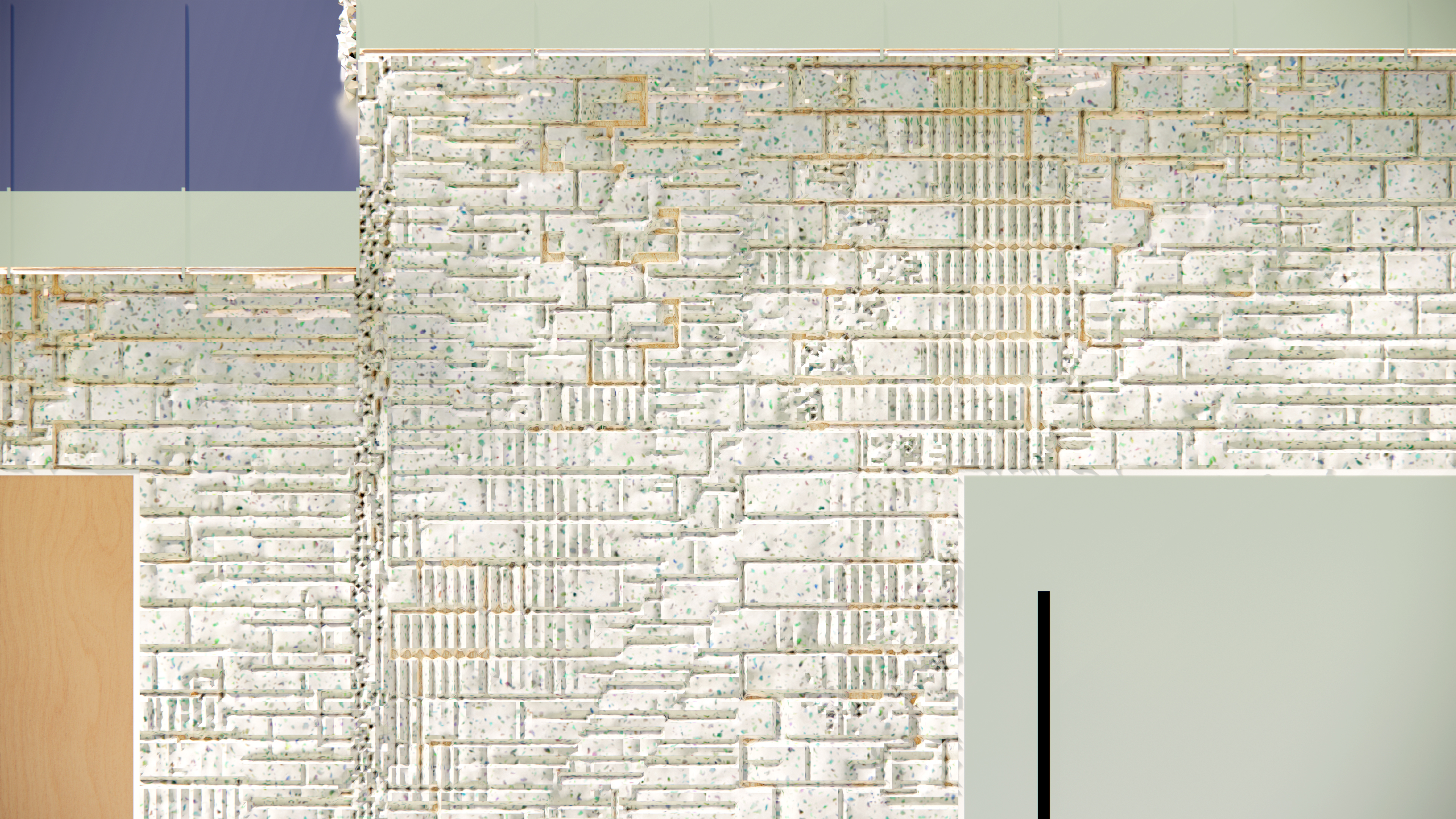
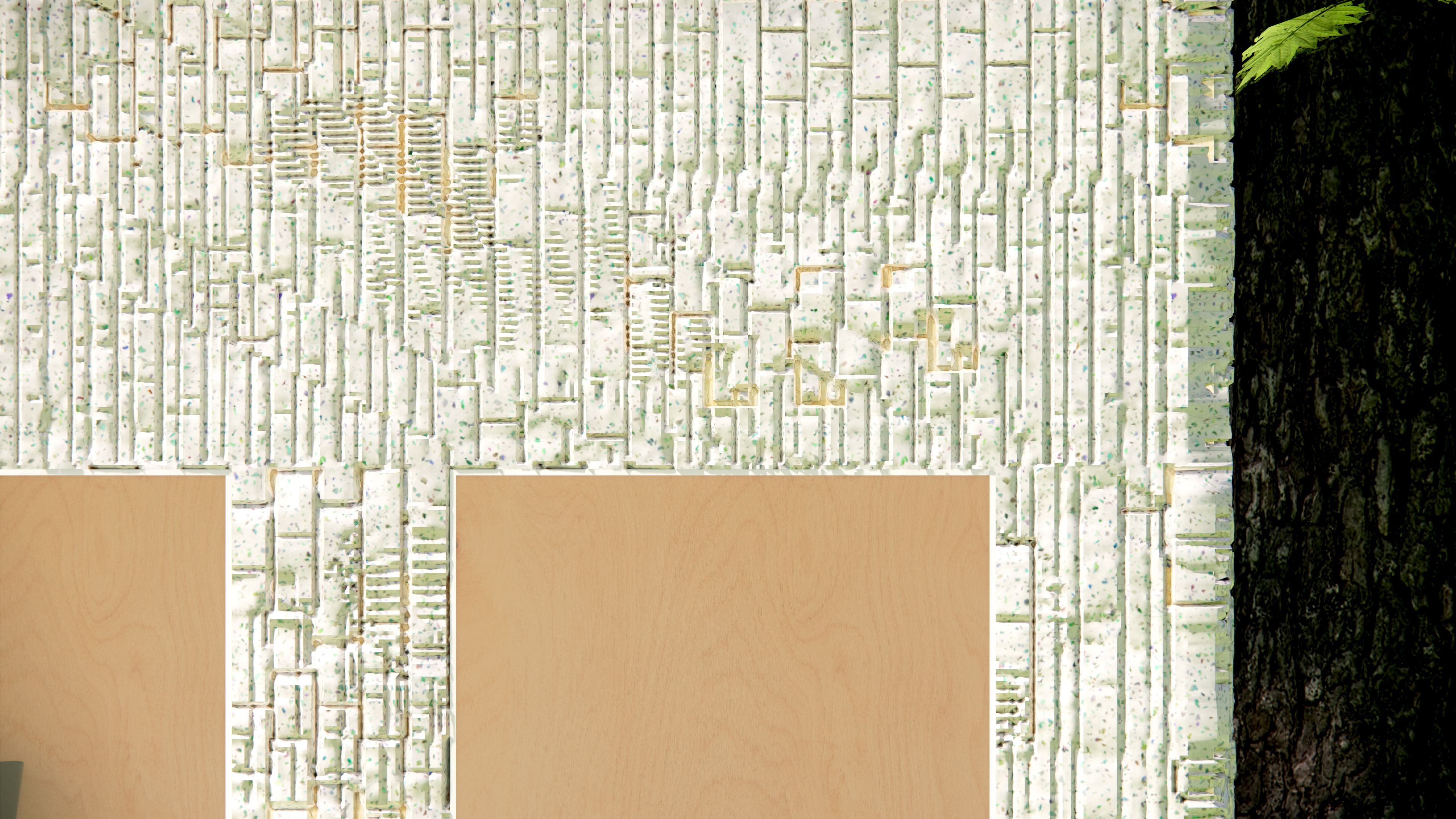
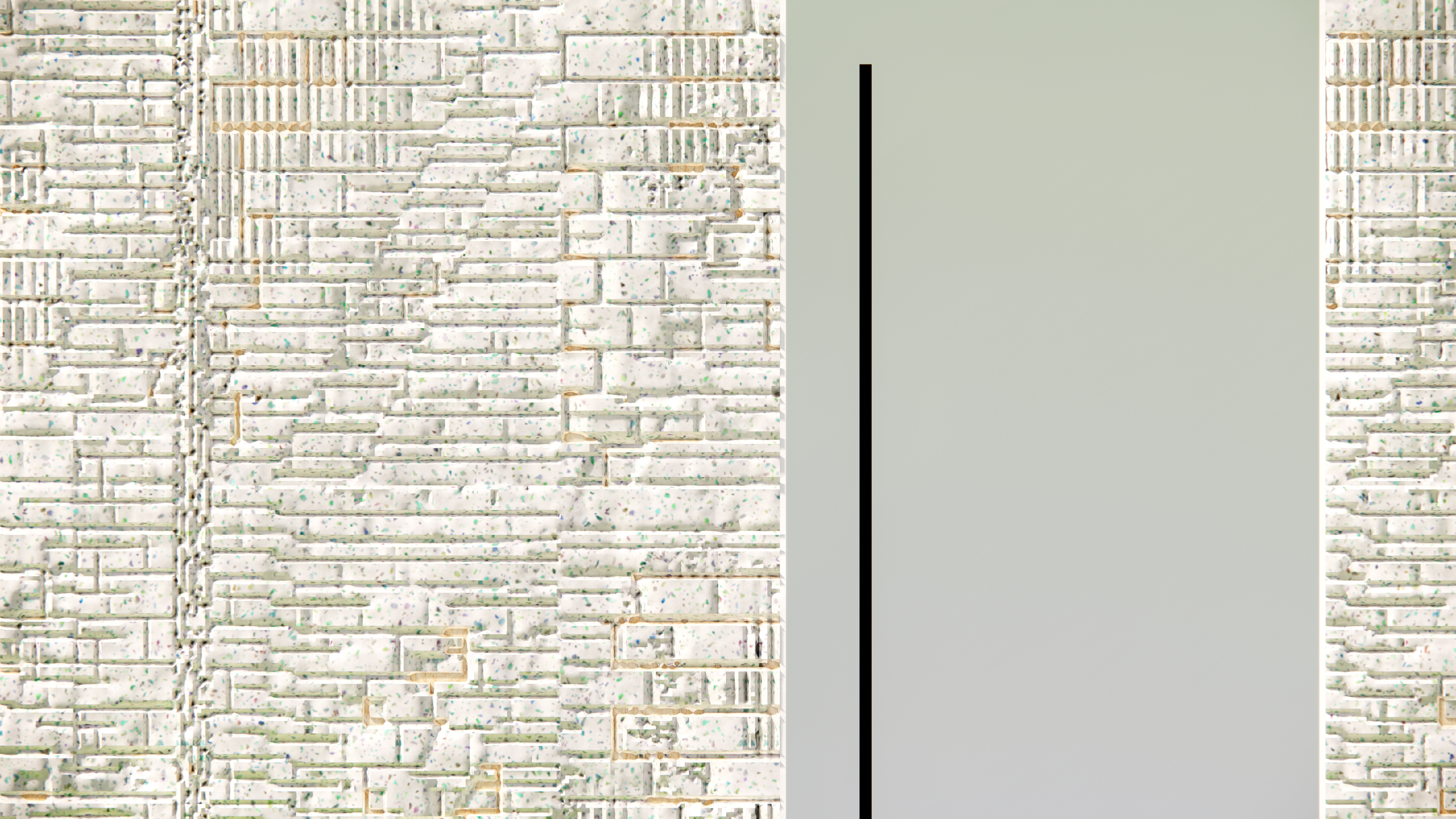
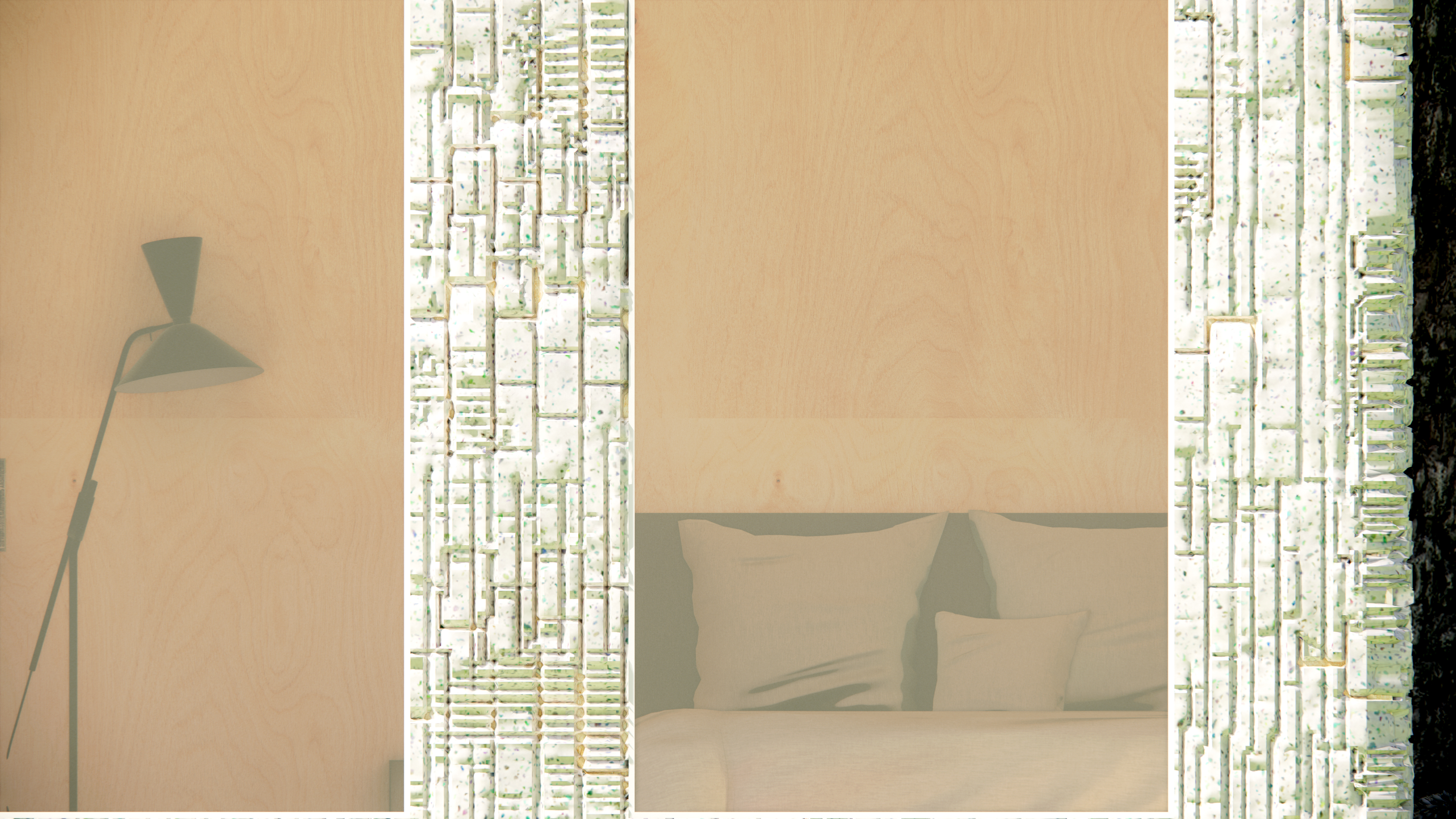
The exterior is clad in custom faux-brick panels derived from digital images of traditional masonry walls. Through image processing and moshing techniques, these source images are warped, repeated, and recomposed into new pattern logics, then translated into molded polypropylene cladding. The resulting envelope mimics the familiar appearance of brick while openly contradicting its material attributes: it is lightweight, fast to install, and marketed as a product of ease rather than endurance.
The project embraces the artifice of simulation instead of disavowing it. Here, the “original” brick wall is dispersed across pixels, textures, and molded surfaces—a form of distributed originality in which authenticity is no longer located in a single material truth but in the network of translations between digital and physical media. Digital Bonds frames the ADU not only as an affordable housing prototype, but also as a critical device for rethinking material legibility, realism, and style in post-digital architecture.
Client: Undisclosed
Status: Schematic Design
Type: Accessory Dwelling Unit (ADU)
Digital Bonds is an accessory dwelling unit (ADU) that stages a negotiation between practical housing infrastructure and post-digital materiality. Sited behind a brick single-family house in Brookline, Massachusetts—one of the state’s most historically protected neighborhoods—the project responds both to the recent statewide legalization of ADUs and to a client’s request that the addition “look like brick.” Rather than reproducing conventional masonry, the project treats this demand as an opportunity to interrogate what “brick” now means in an era of composite and synthetic surfaces.
The exterior is clad in custom faux-brick panels derived from digital images of traditional masonry walls. Through image processing and moshing techniques, these source images are warped, repeated, and recomposed into new pattern logics, then translated into molded polypropylene cladding. The resulting envelope mimics the familiar appearance of brick while openly contradicting its material attributes: it is lightweight, fast to install, and marketed as a product of ease rather than endurance.
The project embraces the artifice of simulation instead of disavowing it. Here, the “original” brick wall is dispersed across pixels, textures, and molded surfaces—a form of distributed originality in which authenticity is no longer located in a single material truth but in the network of translations between digital and physical media. Digital Bonds frames the ADU not only as an affordable housing prototype, but also as a critical device for rethinking material legibility, realism, and style in post-digital architecture.